Paul Heller London Dec 2021
“Life has meaning in spite of it’s tragic aspects” Victor Frankl
Bela Heller Pop. Amsterdam, 27.10.1921 – Bogotá, 12.12.2021
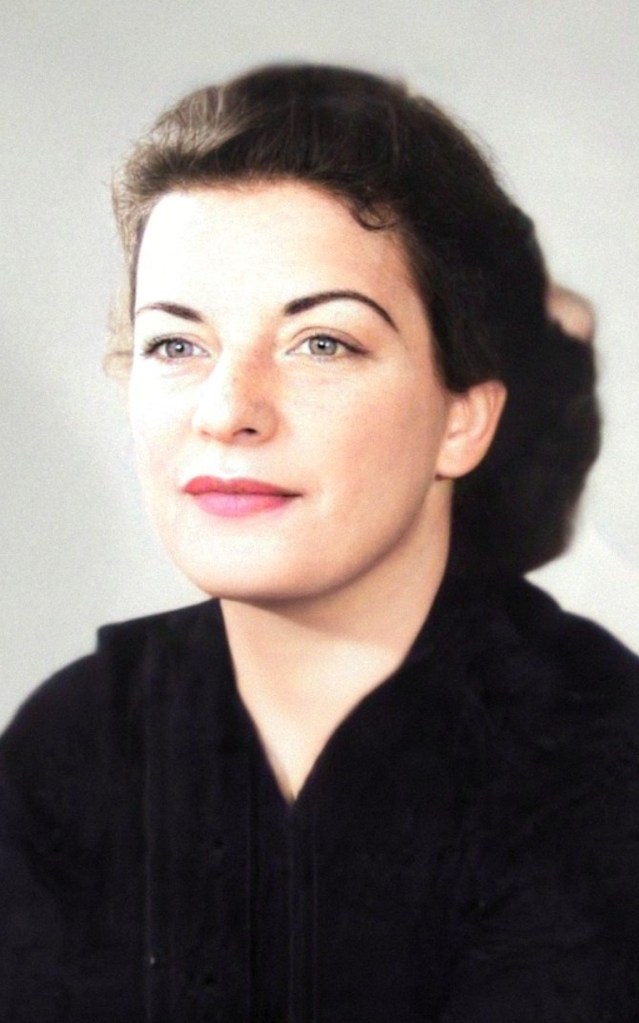
She had very clear memories of her life, although almost all of them were imbued with the pain of its history.
She had two sisters: Lena, a year older, and Selma (Sarah), a year younger. Her family was very united, her father Arthur Pop worked in a cheese factory and her mother Antje looked after the home. Bela finished her secondary education at a Montessori school and she then wanted to attend drama school but was unable to do so. At 17, she began working as a typist in the largest shopping center in the city, but she was later forced to leave her job following the Nazi invasion and occupation of the Netherlands on May 10, 1940.
Meanwhile my father Willy Heller had arrived in the Netherlands from Austria, which had been annexed by Germany. He was 30 years old. In 1938 he had prepared to emigrate with his brother and parents to Colombia in South America, where his cousin Fritz Friedmann, had started a business in 1937 and immediately started to make arrangements to bring the rest of the family over. But as soon as in June 1938 ready to travel, he was sent to Dachau, and later Buchenwald, forced labour camps.

In the camps he had an accident and almost lost an eye and since at that time it was still possible for Jews to leave Europe if they had a visa, which he had obtained, then in June 1939 arrived in Holland to board a ship.
Among with other Austrian and German refugees, he was taken care of the Zionist organisation to work at a village at Wieringermeer, North of Holland, until he could travel. There he learned gardening and general farm work in a project to prepare youth for emigration to Palestine. But after the Nazis invaded Holland in 1940 the Agency said that my father and the 300 other youngsters in the village were in danger and were sent to other parts of the country. He went to Amsterdam, where families in the Jewish community received them. And so it was that my father came to my mother’s home for a Shabbat dinner and they fell in love. My father’s parents Rudolf and Paula did not know his whereabouts since they had traveled to Bogotá, Colombia with his brother Herbert.
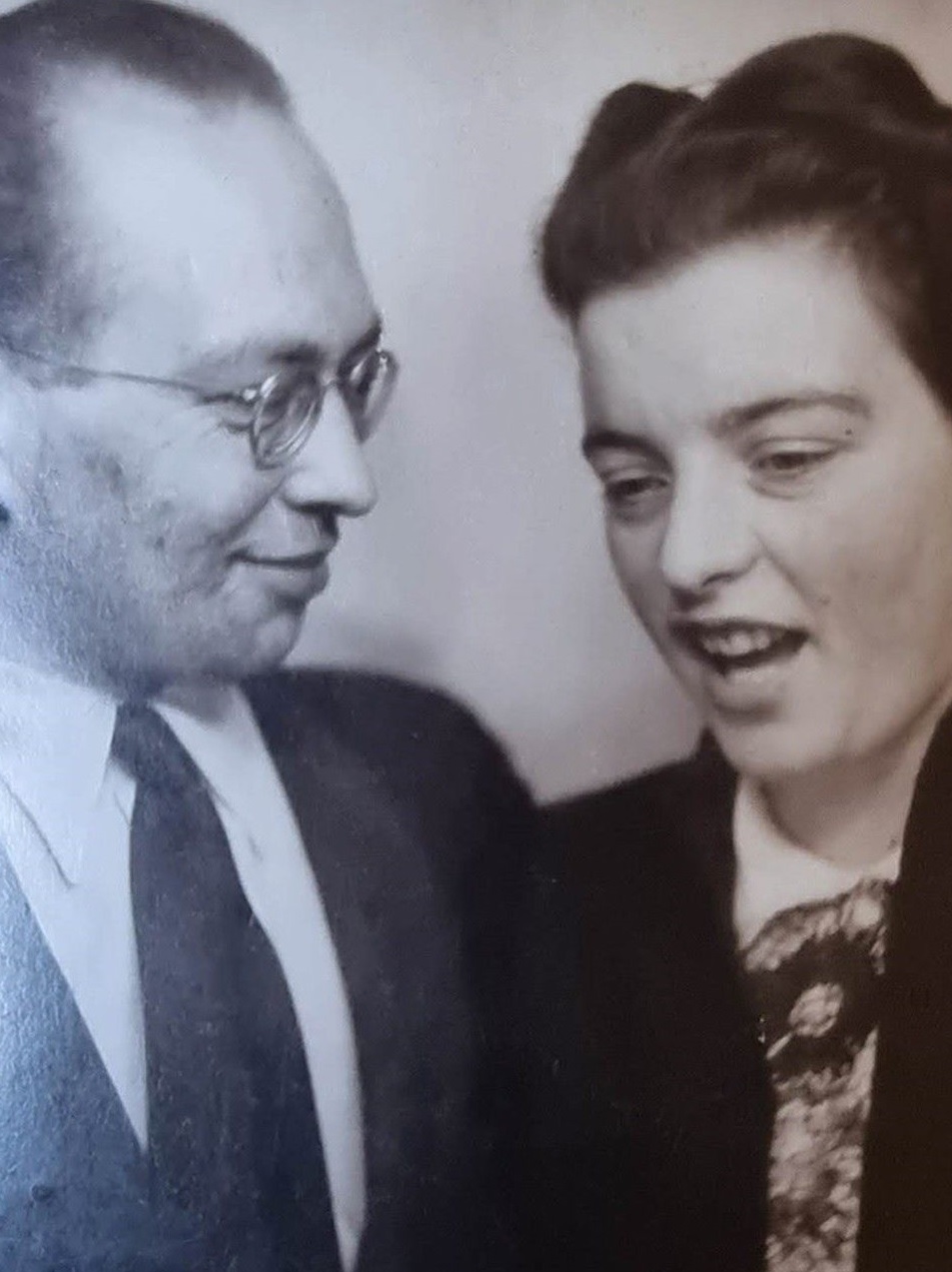
Amsterdam was a dangerous city for Jews. They experienced persecution and abuse. My father was not fluent in Dutch, had an accent, and did not look Dutch. His contacts told him not to stay there and told him of a psychiatric hospital in another city, Appeldoorn, where he would be able to work. They explained that it was a large hospital with huge gardens and he could use the gardening skills that he had learned on the farm. Shortly after he left, the Nazis forced the entire Jewish population to wear a yellow Star of David. When my mother lost her job, she looked at the Jewish newspaper and found that a family needed a babysitter, to care for a child with Down’s syndrome and learning difficulties. Who could imagine that later she too would have a child with the same problem.
My mother worked with the child for some time, teaching him many things and caring for him. A little later she told her parents that her boyfriend – my father – was working at a hospital, as a gardener. She said that she wanted to be a nurse and she eventually left for Appeldoorn, to meet him and to work at the same hospital, since Amsterdam was becoming more and more dangerous, they agreed.
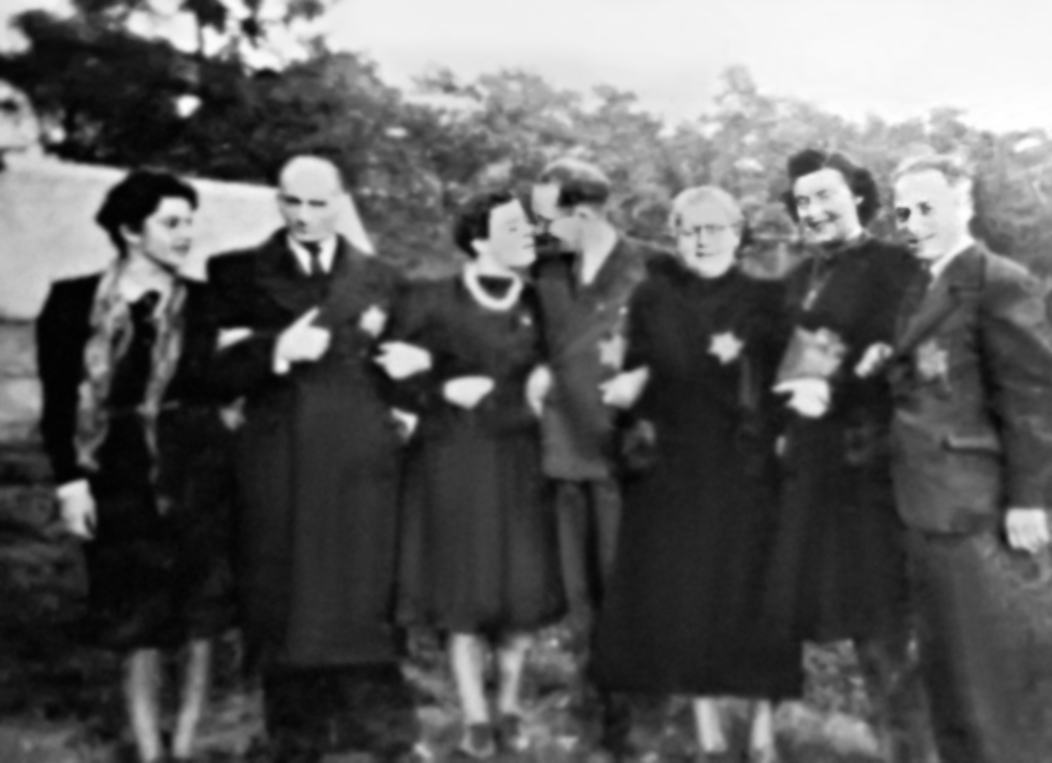
In Appeldorn, on December 16 1942, she and my father were married. Shortly afterward they got special permission, a ‘license’ from the hospital, to take a few days’ leave in Amsterdam. While they were absent the Germans raided the hospital and took all the patients, doctors and nurses to the gas chambers. Besides the horror of the loss of all their colleagues and friends, all their papers were lost.
While my parents worked at the psychiatric hospital, my mother’s parents were forced to move to a new house. The Germans had ordered all Jews to concentrate in a special neighbourhood which was fenced off, to later be taken to Westerbork, the camp north of Amsterdam that was a transit station to the death camps. When my parents came to Amsterdam my mother’s parents still lived there, but my parents couldn’t go to them. A friend he made in Buchenwald, Carli Orozlan, and with whom he had been together at the village, worked with a Dutch underground resistance organisation, the Westertweel group, and they helped to place my parents in safe houses. As a young couple, my mother was 21 and my father 32 they were useful to the resistance. They removed their yellow stars, they had decided not to surrender and they were now joining the resistance group which got them false identification papers. They were sent through a route to France via Belgium, walking across the borders. At first, they did not want to take my mother, because they had never done operations with women, but she was not going to be separated from her husband and she argued that since she was 21, and a good actress she should be the first woman to be sent and help and as her husband spoke almost no Dutch, she convinced them. This very much shows my mother’s strong character, which was demonstrated in all the difficult moments she had to confront in her life.

After the long trip through the borders of Holland, Belgium, and France, worth a whole chapter in a book or even a movie, they arrived in Paris. My father had no major problems because he spoke French and each got a ‘carte d’identité’ with their new false names.
They then went to Normandy and lived in a town called Évreux. The town was full of Germans with a major airport the Nazis had seized, the task my father had was to work among them, in their offices, since he knew German and French, as no one would suspect that a Jew would dare to take such risks. He began working in the department of documentation and passed all the information to the French resistance through my mother. They were in a ‘lion’s den’, in a constant position of extreme danger. But my father was able to help many people, even risking his life. On D-day, June 6, 1944, the Marseillaise was heard. American, Canadian, and British troops entered the town. The officers used my father as an interpreter because he spoke French, English, Dutch, and German, and he toured with them from one village to another to find hidden Nazis. What my parents could not do was return to Holland, because that country was still occupied by Germany. On the day of the liberation of France, my mother did not feel completely happy, in fact, she felt desolate, as she knew nothing about the fate of her parents.
She later received a note from friends informing her that her parents had been taken to the gas chambers.
Her mother had been caught by the Nazis who had lists of people in hiding and sent to Camp Westerbork. In the chaos of the camp, my grandmother met her five-year-old granddaughter, Judith, Lena’s daughter, and they stayed together until the end. Her husband, Arthur, my grandfather, died in Treblinka. The rest of the family, her mother, two sisters, brother-in-law Jack, and little niece Judith Lierens died in Auschwitz. A cousin who had married a Greek woman survived; they later moved to Brussels, but there was very little contact with them. Another family member did some research some years ago and obtained detailed information of where and when the family passed away.
My father’s parents had settled in Bogotá, Colombia. They did not know what had happened to my father, if he was alive or dead. But then the British wired them with news that their son Willy was alive, had married and had been able to return to Holland with his Dutch Jewish wife. They even sent the address where they lived From Bogotá, the family sent them coffee and other delicacies. Later they were able to pay for them to travel to Colombia. So in December 1945, my parents came from Holland to London, then to Newcastle and on to Oslo, and there they took a boat to South America.
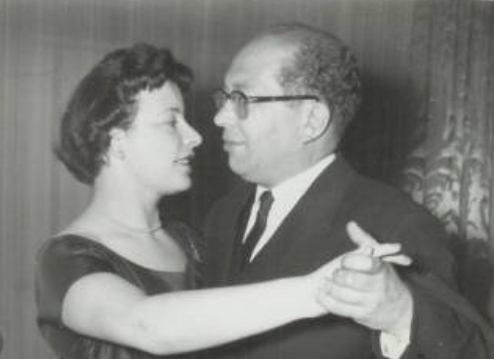
At first, it was difficult for them to adapt to a new life in an unknown country with an unknown language, but then they got work and my mother had a new family. My oldest brother Robert was born in 1947 and had Down’s Syndrome. My brother Peter followed in 1950 and I was born in 1958. My mother took care of us and worked for a while when I was already a teenager first as a tourist guide and later in an American-owned emerald company, where she could use her languages for sales to tourists, but she mainly took care of the home. My father who first inherited his father’s proof-reading business was a licensed translator and interpreter in five languages, and mainly did translations for adopting families.
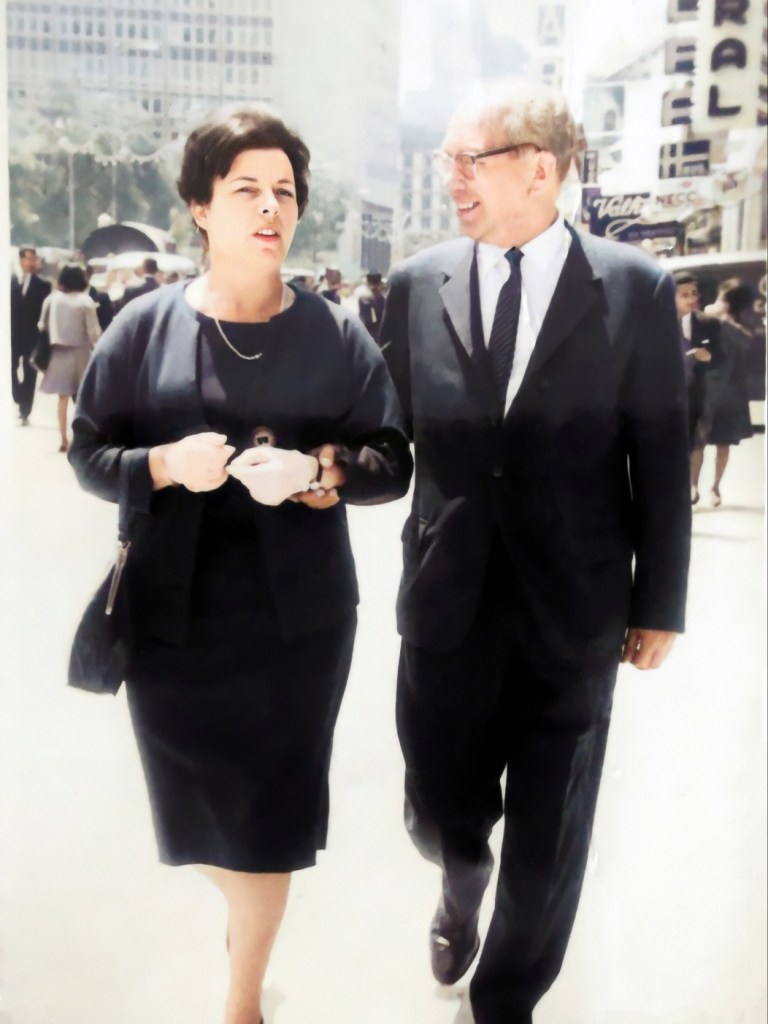
She met her friends of her youth that had survived in Holland in 1962 and several times again, it was one of the highlights of her life.
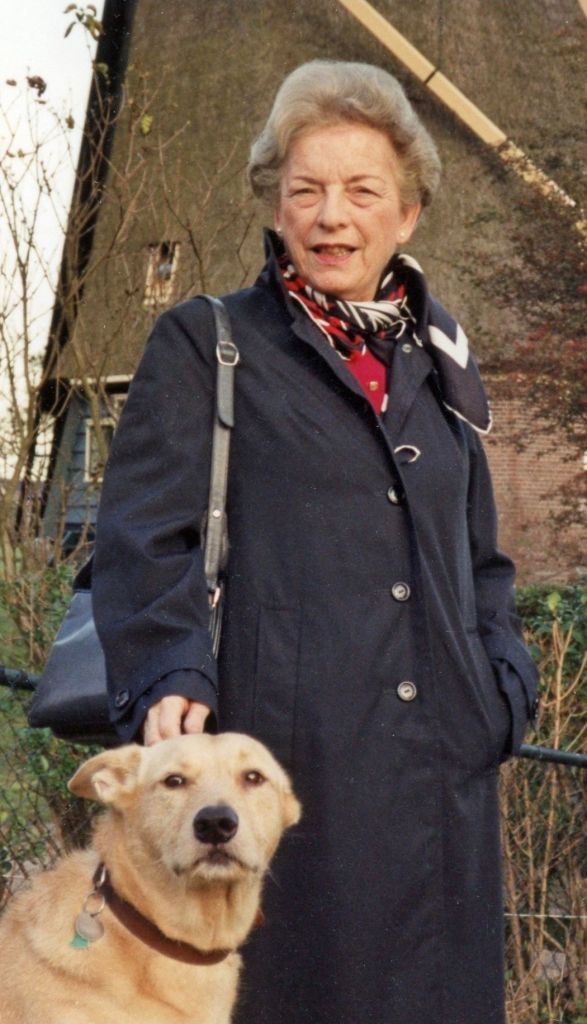
In 1983, my mother underwent an operation on her spine, which unfortunately was unsuccessful. My father began showing early symptoms of Alzheimer’s in 1987 at the age of 77. During the following year, we were able to spend quality time together, taking long walks every morning in downtown Bogotá, where I accompanied him on his usual errands throughout the week. On Fridays, he would pick me up with a driver, and we would go to the synagogue together. In 1988, the day after Yom Kippur, he suffered a massive stroke and was taken to a care facility, where he would spend the next four years unable to speak or manage basic tasks on his own. This was a very sad time for our family. He passed away in 1992.Despite these challenges, my mother managed to live independently for a time and remained active; she drove around and volunteered at the synagogue’s old age home. However, in 1998, she became a resident there herself. Her back condition worsened, and it became too risky for her to undergo a second operation, so she had to live with scoliosis. Eventually, her condition deteriorated to the point where one of her hips touched her ribs, and she required a wheelchair. Throughout the years, we visited her as often as we could, along with my children, Yohel and Michelle. Every time she saw us, her joy was evident.

My oldest brother, Robert, who had Down syndrome, passed away in 2010. He lived in a care facility from a very young age, and my mother was somewhat relieved that he did not outlive her. She spent 21 years in a Jewish nursing home, which had transformed into a modern nine-storey building serving the entire Colombian Jewish community, and she had a caregiver. Although she had all her needs met in the home, she missed the active social life she previously enjoyed with many friends. She still looked forward to going out regularly with her grandson, Steven, who tragically passed away in 2016 and was very close to her
Her health deteriorated rapidly, and she required palliative care in her final months. Her granddaughter Daniella, who lived abroad and had valuable connections from medical school, took charge of her care.
We celebrated her 100th birthday in October 2021, she still was bright in her mind and enjoyed the moment, despite her suffering.
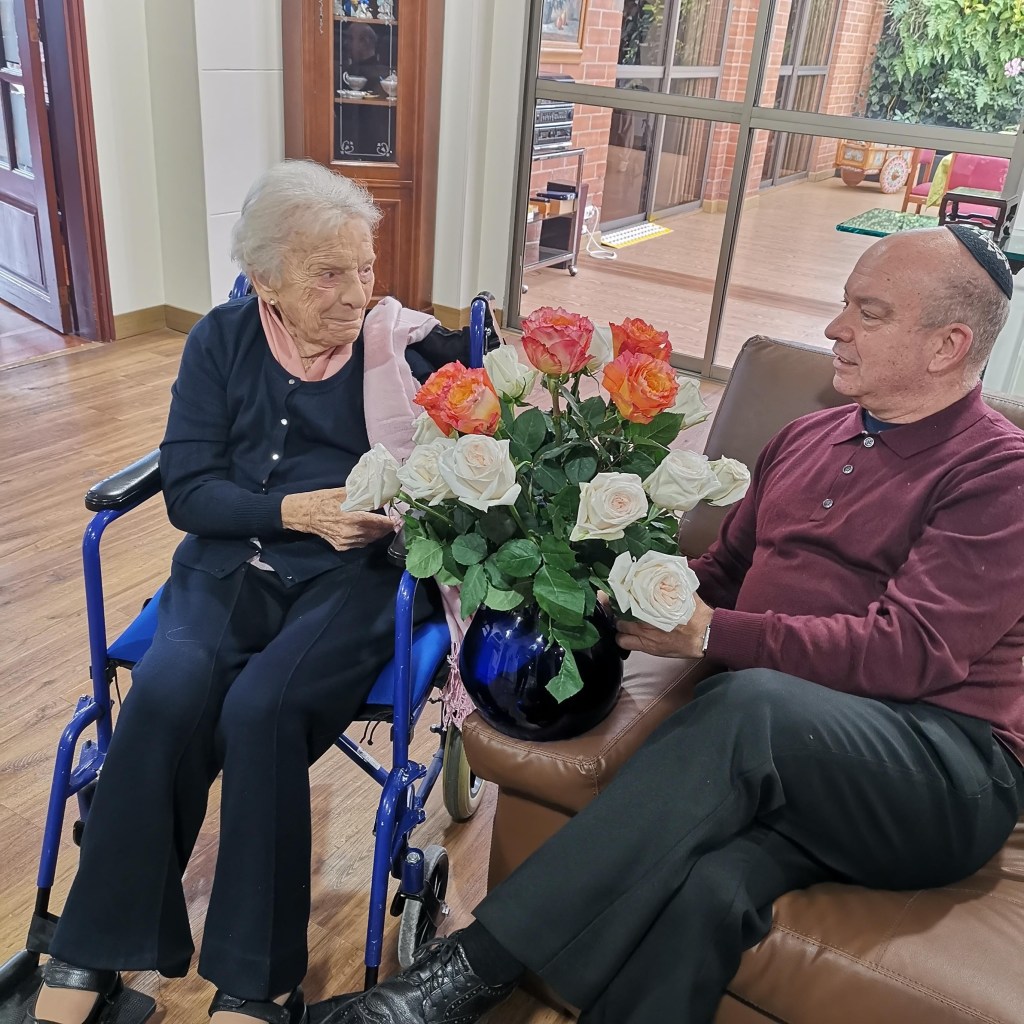
She poured her heart into sharing her story, as difficult as it was, for her family, grandchildren, great-grandchildren, and all the future generations who should never forget. Having lived a long and eventful life.
They nurtured a family, instilling lessons of resilience and faith in both life and God. Now, they are warmly received by God in heaven, joyfully reunited with loved ones.
May their memory be a blessing!
 kantorer.com -Officiant-Translator-Odontologist
What a truly remarkable story combining love, heroism and great sadness. To have a family history documented like this a great tribute to Bela Heller. It will be assured that her memory and memories live on. Thank you, Stewart Kerry
Thank you dear Stewart